Attending  EAU 2026? Visit Booth S12.

Treat a wider spectrum of prostate cancer and BPH patients—and help them maintain their quality of life.

Proven In 4000+ Procedures

The TULSA-PRO Difference

TULSA-PRO® is the only MRI-guided, incision-free prostate therapy that delivers unmatched flexibility and precision—enabling surgeons to treat prostate disease, and utilize any treatment plan with confidence.

One platform. Multiple treatment strategies

TULSA-PRO enables focal, multifocal, hemi, partial, subtotal, and whole-gland ablation—and everything in between—on a single system.

No trade-offs between precision and coverage

Treats anterior, posterior, apical, peripheral, or central lesions.

Real-time MRI for real-time decision making.

Treatment is planned and adjusted live with evolving boundaries to account for edema and tissue changes—not possible with ultrasound-based systems.

A mainstream, future-ready technology

One system that adapts to patient heterogeneity rather than forcing patient selection to fit the technology.

Discover the Future of Prostate Surgery

Treatment Built on Three Clinical Pillars

Confidence

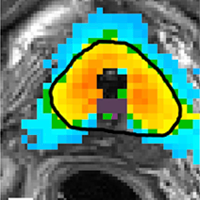
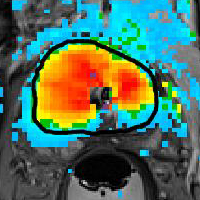
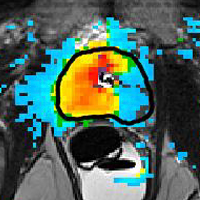
  • Real-time MRI visualization and thermometry before, during, and after treatment
  • Closed-loop temperature feedback control for predictable ablation
  • CAPTAIN randomized trial demonstrates perioperative advantages vs. prostatectomy

Precision

  • Directional ultrasound with millimeter-level control
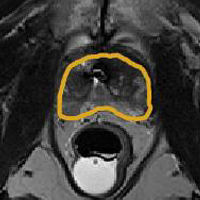
  • AI-assisted contouring and treatment planning
  • Pixel-by-pixel thermal dosing guided by MRI thermography

Preservation

  • Designed to prioritize continence and sexual function
  • No incision, no radiation, no procedural blood loss
  • Single-session outpatient procedure

Suitable for a Wide Range of Prostate Cancer and BPH Patients

Benign

Image 1

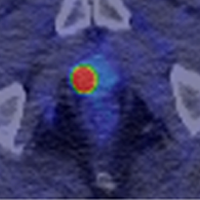
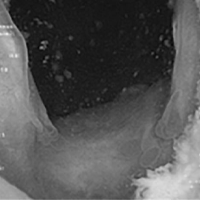
BPH, any size or shape

Organ Confined Prostate Cancer

Image 1

Combination prostate cancer & BPH

Image 1

Lesion targeted focal ablation

Image 1

Whole-gland customized for Quality of life

Salvage

Image 1

Second line treatment after failed local therapy

Locally Advanced

Image 1

Palliative debulking & symptom relief

In Use by Clinicians at Many of North America's Leading Medical Centers

Sunnybrook
Sunnybrook
Sunnybrook
Sunnybrook
Sunnybrook
Sunnybrook
Sunnybrook
Sunnybrook
Sunnybrook
Sunnybrook
Sunnybrook
Sunnybrook
Sunnybrook
Sunnybrook
Sunnybrook
Sunnybrook

TULSA-PRO patients are in better overall health after treatment compared to RP

Significantly Better Overall health During First Month Post-Treatment

Health Outcomes Graph

Meng et al. MRI-GUIDED TRANSURETHRAL ULTRASOUND ABLATION (TULSA) OF LOCALIZED PROSTATE CANCER: SINGLE INSTITUTION EXPERIENCE OF TREATMENT EFFICACY. The Journal of Urology (2025)

Backed by 70+ peer-reviewed publications, including:

MR Imaging in Real Time Guiding of Therapies in Prostate Cancer

Viitala et al, BJU Int (2025)

Read the publication

Salvage transurethral ultrasound ablation (TULSA) for localized radio-recurrent prostate cancer: 12-month safety and oncological outcomes

Anttinen et al, The Journal of Urology (2024)

Read the publication

Pivotal Study of MRI Guided Transurethral Ultrasound Ablation (TULSA) of Localized Prostate Cancer: 5-Year Follow Up

Eggener, Scott, et al, Journal of Urologic Oncology (2023)

Read the publication

Magnetic Resonance Imaging-Guided Transurethral Ultrasound Ablation of Prostate Cancer: A Systematic Review

Dora et al, Journal of Endourology (2022)

Read the publication

Magnetic Resonance Imaging-Guided Transurethral Ultrasound Ablation of Prostate Cancer

Klotz et al, The Journal of Urology (2021)

Read the publication

A brief overview of how TULSA-PRO works

Hear from your colleagues on PRO-TALK

Access an educational platform created for physicians by physicians that connects you with webinars, thought leaders, and other experts to uncover new trends, advancements in medical technologies, and research relating to prostate health.

Get Access

What else can TULSA-PRO’s unmatched combination of flexibility, precision, durability and safety do for your patients and your practice?

Learn More
Connect with a Patient Educator